
 By
By Best Catholic Books for Spiritual Growth and Faith
There’s a question I get fairly often, usually from someone who’s been raised Protestant or has no religious background at all: “I want to understand Catholicism better — where do I even start?” And there’s a harder version of that question, the one that comes from cradle Catholics who sat through Mass every Sunday for twenty years and suddenly realise they don’t know why they believe what they believe. They love their faith, but they want more than habit. They want roots.
This list is for both. Catholic literature is one of the richest Christian traditions. It spans centuries—from a 5th-century bishop to a former Presbyterian professor who found his way home at an Easter Vigil in 1986.
These ten books are not ranked. Each one is chosen because it does something the others don’t, and because it has genuinely changed how people read, pray, and live.
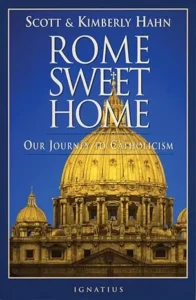
Rome Sweet Home — Scott & Kimberly Hahn
Before Scott Hahn became one of the most widely read Catholic theologians in America, he was a Presbyterian minister — top of his seminary class, deeply anti-Catholic, and certain he could argue any Catholic into abandoning “Romanism.” Then one of his own seminary students asked him a question about Scripture he couldn’t answer. That single moment sent him down a road he’d spent years trying to avoid. He converted in 1986. His wife Kimberly — daughter of a well-known Protestant minister — spent four more years in what she describes as a dark night of the soul before following him.
What makes this book unusual is how intellectual the conversion is. Hahn doesn’t arrive at Catholicism through emotion or spiritual exhaustion. He arrives through Scripture — specifically by studying covenant theology so rigorously that the Catholic position stopped being what he was arguing against and became the thing he couldn’t refute. It’s an honest, sometimes painful book, and for anyone wondering what draws thinking, Bible-serious Christians into the Catholic Church, it’s the most readable starting point available.
Best for: Protestants curious about Catholicism · Catholics wanting a fresh appreciation of their faith. Get it: Rome Sweet Home on Amazon
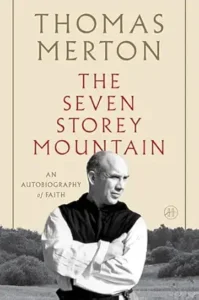
The Seven Storey Mountain — Thomas Merton
Thomas Merton was not supposed to become a monk. He was a Columbia University student in the 1940s who, by his own account, had spent much of his early twenties in exactly the kind of life you’d expect from a restless literary intellectual. Then, unexpectedly, he converted to Catholicism. Then, even more unexpectedly, he entered one of the strictest monastic orders in the Church — the Trappists — at an abbey in rural Kentucky, at twenty-six years old. Published in 1948, The Seven Storey Mountain sold 600,000 copies in its first year and has never gone out of print.
The book works because Merton writes about faith the way someone actually encounters it — confusingly, gradually, with enormous resistance, and then at a certain moment with a kind of inevitability he didn’t choose. He describes monastic enclosure — the act of being literally cut off from the world — as finding “the four walls of my new freedom.” Fulton Sheen called it a twentieth-century version of Augustine’s Confessions, and he wasn’t exaggerating. If you have never read Merton, start here.
Best for: Spiritual memoir readers · Anyone who feels restless in — or without — their faith. Get it: The Seven Storey Mountain on Amazon
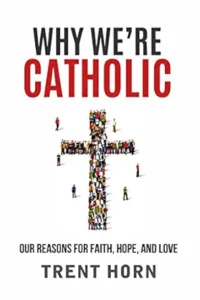
Why We’re Catholic — by
Are you looking for clear, compassionate answers about the Catholic faith? In Why We’re Catholic, popular apologist Trent Horn delivers a logical and friendly explanation of what Catholics believe—and why. Written for seekers, skeptics, and practicing Catholics alike, Horn builds a step-by-step case for the Faith from the ground up.
Instead of getting bogged down in dense theological jargon, Horn starts with the most fundamental human questions and builds a complete, cohesive picture of truth. He begins by showing why reason and science point to a Creator, then moves to the historical evidence for Jesus Christ’s life and resurrection.
From there, he explains why Jesus established a visible Church with authority, sacraments, and historical continuity, before addressing common questions about Mary, the papacy, confession, and the Eucharist. Get it: Why We’re Catholic on Amazon The Seven Storey Mountain on Amazon
The Lamb’s Supper — Scott Hahn
Most Catholics attend Mass every week. Many of them, if you asked them to explain what’s happening and why it’s structured the way it is, would struggle to get past the basics. Hahn’s central argument in this book is genuinely surprising when you first encounter it: the Book of Revelation is not a prophecy about geopolitical catastrophe at the end of time — it’s a description of the Mass. The altar, the incense, the white robes, the Lamb — that imagery is liturgical language that the early Christians would have recognised immediately from their experience of the Eucharist.
Once you see that connection, the Mass looks completely different. Hahn writes this the way he writes everything: clearly, without unnecessary jargon, and with the enthusiasm of someone who actually finds this material fascinating rather than obligatory. The book is short enough to read in a few evenings and rich enough to return to. Many people describe it as the point where attending Mass shifted from weekly habit to something they couldn’t wait to do.
Best for: Catholics who want to understand the Mass more deeply · Protestants curious about Catholic worship. Get it: The Lamb’s Supper Mountain on Amazon
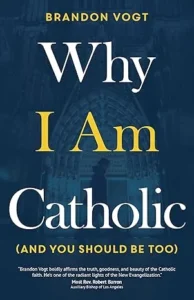
Why I Am Catholic (and You Should Be Too) — Brandon Vogt
Are you searching for a clear, convincing reason to embrace the Catholic Church today? In Why I Am Catholic (and You Should Be Too), author and speaker Brandon Vogt offers a fresh, intelligent, and compelling case for Catholicism. Writing with clarity and conviction, Vogt addresses the doubts and objections that often keep people away from the Church.
Instead of relying on dry arguments, Vogt grounds his case in beauty, truth, goodness, and history. He explores how the Catholic Church built Western civilization, preserved sacred Scripture, and produced history’s greatest saints and thinkers. He also directly tackles hard questions about Church scandal, authority, and moral teachings, showing why the Church remains the spiritual home Jesus founded. Get it: Why I Am Catholic on Amazon
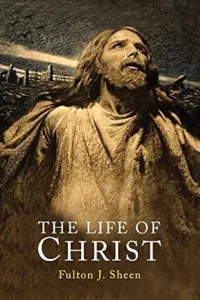
Life of Christ — Fulton Sheen
Fulton Sheen is the only Catholic bishop ever to win an Emmy. In the 1930s and 40s he reached four million radio listeners a week. He moved to television — despite being scheduled against Milton Berle and Frank Sinatra — and drew audiences in the tens of millions. He wrote over ninety books. Pope Benedict XVI declared him Venerable in 2012 as part of his cause for canonisation. Life of Christ is what most people who know his writing would call his greatest.
Fulton Sheen paints a vivid portrait of Jesus from birth to resurrection. He does not write a dry textbook; he speaks like a master preacher describing a personal friend. Sheen shows how the Cross shadowed Christ’s life from the very beginning—a profound insight that shapes every chapter.
Best for: Any Christian wanting a deeper encounter with the Gospels · Excellent for Lent reading. Get it: Life of Christ on Amazon
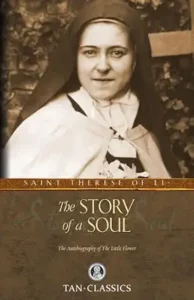
Story of a Soul — St. Thérèse of Lisieux
Thérèse Martin entered the Carmelite convent at fifteen and died at twenty-four from tuberculosis. She never left France, never preached publicly, and was by every worldly measure completely obscure. Her superiors asked her to write her spiritual memoir. She did — in exercise books, during the final years of her life while she was dying. That manuscript became Story of a Soul, and it has been changing lives since it was first published in 1898.
St. Thérèse introduced the “Little Way”—the belief that anyone can achieve holiness through small, daily acts of love. She writes honestly about managing difficult people, enduring spiritual dryness, and choosing kindness. Pope John Paul II named her a Doctor of the Church because her practical message inspires anyone striving to love well.
Best for: People who feel they’re not “good enough” for a deep spiritual life · Devotional reading, a few pages at a time. Get it: Story of a Soul on Amazon
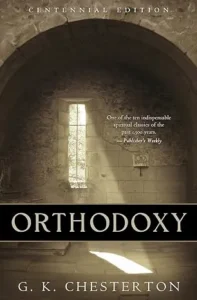
Orthodoxy — G.K. Chesterton
Chesterton wrote Orthodoxy in 1908 to answer critics who said his worldview was inconsistent. His response — and this is very much Chesterton — was to write a book explaining that he had independently arrived at Christianity through pure reason, only to discover that the Church had been there for two thousand years waiting for him. He was not yet formally Catholic when he wrote it (he converted in 1922), but the thinking is Catholic through and through, and the book remains one of the most quoted in Catholic intellectual life.
hesterton defends Christian orthodoxy with wit, humor, and brilliant paradox. He shows that original sin needs no faith—just simple observation. He also proves that the Church protects true freedom rather than limiting it. If anyone calls Christianity intellectually weak, hand them this book.
Best for: Intellectually curious readers · Anyone who finds faith difficult to defend in conversation. Get it: Orthodoxy on Amazon
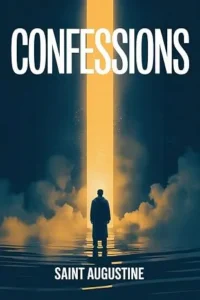
The Confessions — St. Augustine
Augustine wrote this in the late 390s as a long prayer to God, looking back over his life — his restlessness, his years in a Manichaean sect, his concubine, his son, and the slow, resistant journey toward faith that his mother Monica prayed over for decades. The most famous line — “You have made us for yourself, O Lord, and our hearts are restless until they rest in you” — is not a platitude. Read it in context, after three hundred pages of watching Augustine run from God in every direction he can find, and it lands completely differently than it does on a motivational poster.
Augustine was one of the most brilliant minds in the history of the Christian Church and, for much of his early life, a genuine mess. That combination is what makes the Confessions feel startlingly contemporary. This is not the easiest book on the list, but it may be the most important. You don’t read it so much as you recognise yourself in it — and then you understand why it has been in continuous circulation for over sixteen hundred years.
Best for: Serious readers willing to go slowly · Anyone who has ever felt the gap between who they are and who they want to be. Get it: Confessions on Amazon
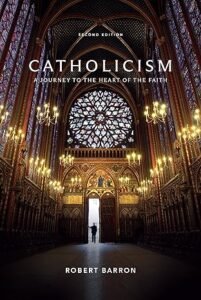
Catholicism — Bishop Robert Barron
Robert Barron is the founder of Word on Fire Catholic Ministries and one of the most visible Catholic voices in the English-speaking world today. Catholicism began as a ten-part documentary series that aired on PBS and was watched by millions — this book is the written companion, though it stands entirely on its own. It is a comprehensive portrait of what Catholics believe, how they worship, who their saints are, and why the tradition looks and feels the way it does, told through places, people, and art spanning two thousand years of Church history.
What separates it from a simple introduction is Barron’s ability to make the intellectual case for beauty as a path to truth. He moves through the Sistine Chapel, Chartres Cathedral, the writings of Thomas Aquinas, and the lives of figures like Thomas More and John Henry Newman — not as a tour guide but as someone who genuinely believes these things point somewhere real. If you want one book that gives you the breadth of Catholic life and thought, this is the one to reach for first.
Best for: Complete beginners · People who respond to beauty, art, and history as entry points to faith. Get it: Catholicism on Amazon
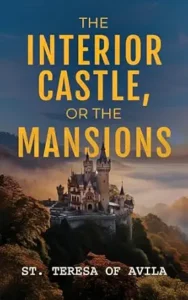
Interior Castle — St. Teresa of Ávila
Teresa of Ávila wrote Interior Castle in 1577 at the request of her confessor, completing it in just two months while managing a reform of the Carmelite order and dealing with serious illness. It is the mature work of a woman who had spent decades in contemplative prayer, and it remains the most systematic treatment of the interior life in Catholic mystical literature. The image she uses: the soul is a castle made entirely of crystal, with seven concentric dwelling places leading toward the innermost room where God himself dwells.
The book describes the journey inward — through distraction, self-knowledge, struggle, consolation, and eventually a union with God that Teresa is careful to say cannot be manufactured or rushed. She is not abstract. She is frequently impatient with herself, occasionally funny, and always grounded in the practical reality of trying to pray well while living an ordinary human life. John Paul II named her a Doctor of the Church — the first woman ever to receive that title. This is the book for readers who have moved past introductory faith books and want depth.
Best for: Anyone drawn to contemplative prayer · Readers ready to go beyond surface-level spirituality. Get it: Interior Castle on Amazon
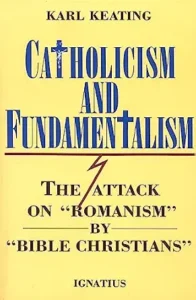
Catholicism and Fundamentalism — Karl Keating
When Keating published this book in 1988, clear responses to anti-Catholic claims were rare. This landmark work helped restart modern Catholic apologetics. Keating directly addresses common objections—like claims that Catholics worship Mary, reject the Bible, or invented the papacy. Drawing on Scripture, history, and the early Church Fathers, he clearly explains what Catholicism actually teaches.
Keating writes with a calm, charitable tone—never to win arguments, but to build understanding. He equips Catholics to answer tough questions with confidence and gives non-Catholics a clear picture of Church teaching. If you ever feel unprepared in faith conversations, keep this practical guide on your shelf.
Best for: Catholics who want to explain their faith confidently · Non-Catholics wanting to understand what the Church actually teaches. Get it: Catholicism and Fundamentalism on Amazon
Where to Begin
Start with Rome Sweet Home or Catholicism by Bishop Barron — both are accessible. Both assume no prior knowledge, and both will leave you with something to think about regardless of where you’re coming from. Do you want to be challenged? Go to Merton or Chesterton. Want a slow morning devotional? The Story of a Soul and Life of Christ are great choices. If you ever feel unprepared to answer tough questions about the Faith, pick up Keating next.
None of these ten books filled a content calendar or chased a trend. Deeply convicted authors wrote them because they could not keep silent. That kind of writing stays with you forever.
Have a Catholic book that changed how you see your faith? Share it in the comments — we read every one. And if this list was helpful, you might also enjoy our guides to [Reformed theology books] and [Christian books on church history].